A G O S
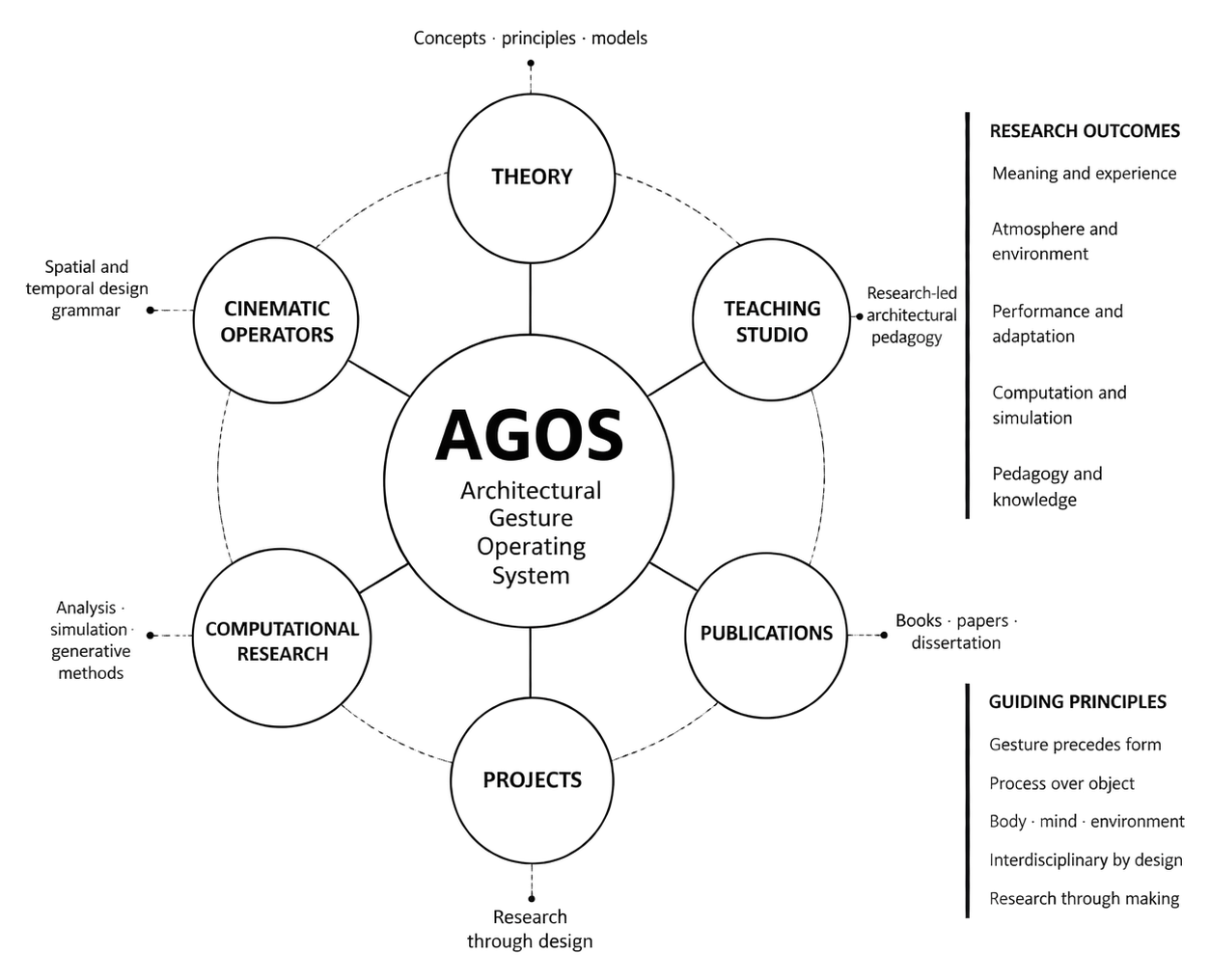
AGOS investigates how gesture generates architecture.
It develops gesture as an operative system for transforming
movement, spatial relations, and atmospheric conditions
into architectural form and experience.
Through theory, computation, cinematic analysis, and design experimentation, AGOS explores how gestures can be identified, translated into operations, and tested as generative architectural strategies. The research unfolds through interconnected frameworks, computational methods, projects, workshops, publications, and teaching.
AGOS Manta is a custom Rhino/Grasshopper framework for translating gesture, perception, and temporal movement into architectural operations. Developed through the Archigesture research, it treats movement not as a form to be represented but as a relationship that can generate spatial transformation.
The system connects motion data, bodily gesture, threshold conditions, traces, cinematic framing, and temporal sequence within a single computational workflow:
BVH | Gesture | State | Threshold | Trace | Frame | Sequence
Designed as an Architectural Gesture Operating System research platform, AGOS Manta allows bodily and cinematic relations to become measurable, traceable, and materially transformable in architectural space.
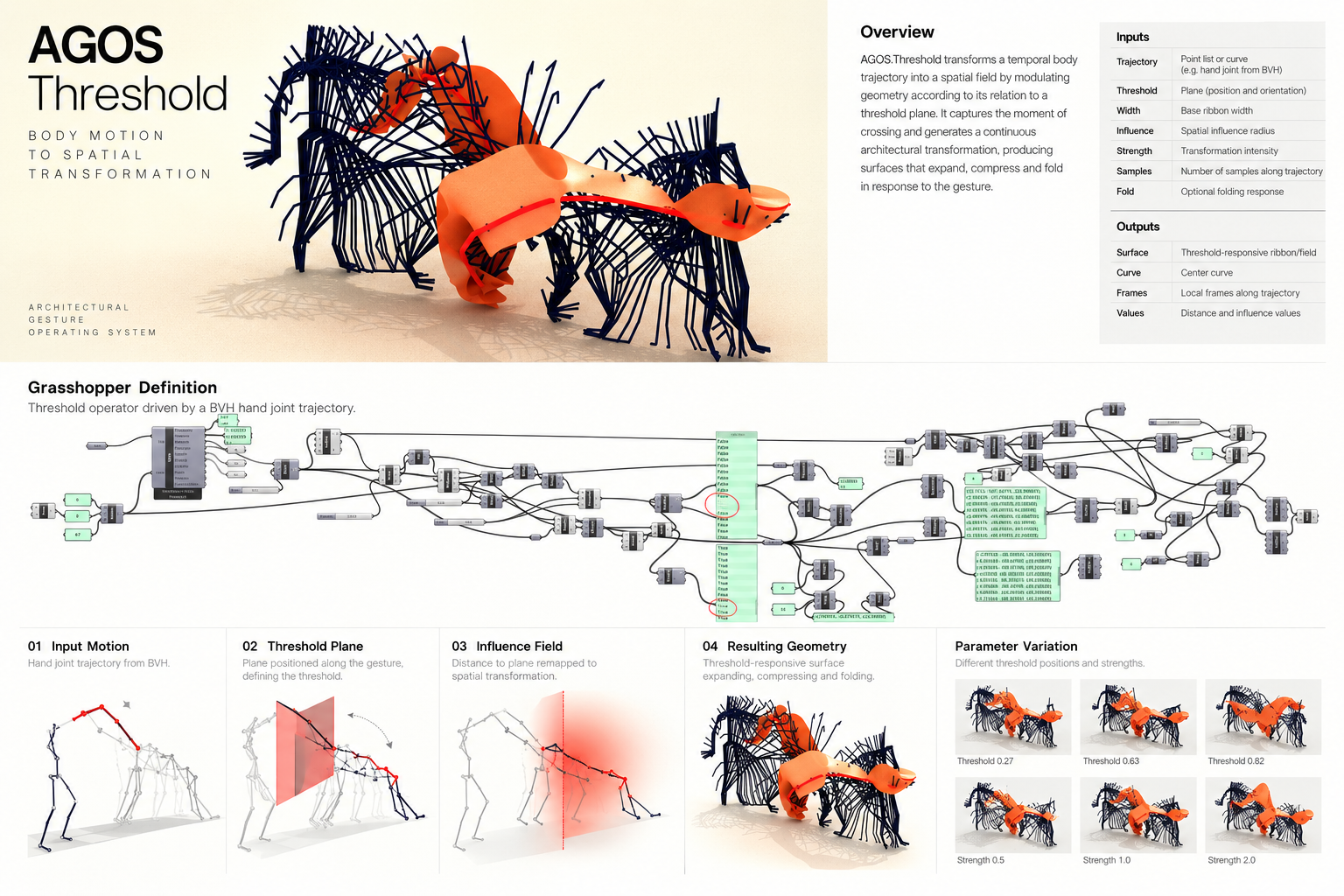
AGOS Manta is a computational framework through which architectural gesture can be encoded, transformed, traced and tested.
ΔS = Change in Spatial Configuration
ΔS (Delta S) describes the change in spatial configuration produced by an architectural operation. Within AGOS Manta, it expresses the relationship between an initial spatial condition and its transformed state, allowing architectural change to be investigated as an operative process rather than simply as a representational outcome.
The formulation compares spatial conditions before and after a transformation, examining what has been added, removed, displaced or otherwise changed. ΔS is a developing component of the AGOS framework, intended to support the analysis and measurement of architectural transformation.
What does ΔS mean?
ΔS = Change in Spatial Configuration
Δ (delta) = Change or difference
S = Spatial configuration, the arrangement and organisation of spatial geometry
therefore ΔS denotes the change between two spatial configurations.
The central idea is that architecture can be investigated not only through its resulting form, but also through the transformation from one spatial condition to another.
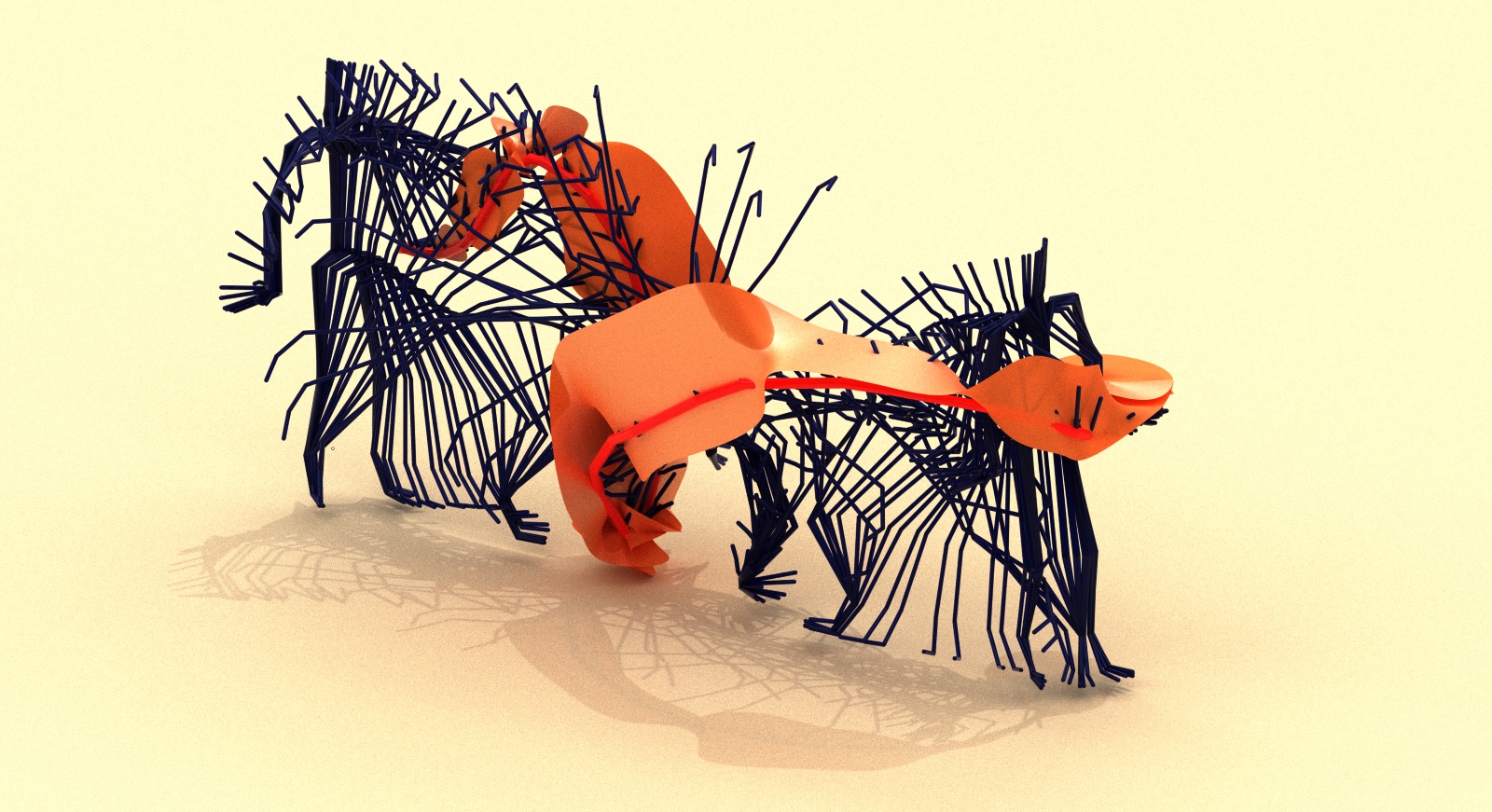
For example, a wall may be opened to create a passage, a surface may be displaced by a moving body, or a spatial field may be compressed around a threshold. In each case, an initial spatial condition gives way to a subsequent condition.
Archigesture investigates the transformation between these conditions. The key distinction is that ΔS is not simply the difference between two shapes. It concerns the spatial change occurring between two configurations, including where change occurs, how much change occurs, and which spatial relationships are added, removed or altered.
The proposed mathematical expression for this principle is:
ΔS = 𝒜(S0, S1)
Where:
ΔS is the spatial change being investigated.
𝒜 is the proposed Archigesture comparison and transformation operator.
S0 is the initial spatial configuration.
S1 is the subsequent spatial configuration.
In other words:
Initial Space → Transformation → Resulting Space
Archigesture examines the relationship between the initial and subsequent configurations to investigate what has changed. The notation 𝒜 is a proposed way of expressing this relationship mathematically. It does not imply that the current AGOS Manta plugin already implements this complete formalism.
Why not just write ΔS = S1 − S0?
This expression can describe change when two spatial configurations have suitable mathematical representations and can be compared through an established correspondence. However, architectural geometry can involve different numbers of vertices, different topologies and different geometric structures. One configuration cannot always be subtracted directly from another in a meaningful way.
The subtraction symbol captures the general idea of difference, but does not by itself describe the full Archigesture approach. The proposed operator 𝒜 leaves open the possibility of examining several aspects of spatial change, including displacement, additions, removals, geometric relationships and the distribution of transformation across a spatial field.
The Complete Archigesture Workflow
The principle can be remembered as five operations:
S0 → S1 → ΔS → TransformField → Architectural Interpretation
- Establish: Define the initial spatial configuration, S0.
- Transform: Produce the subsequent configuration, S1, through an architectural operation.
- Compare: Investigate the spatial change, ΔS, between the two configurations.
- Represent: Express the change through appropriate measures, such as displacement, additions, removals and a transformation field.
- Interpret: Investigate how the identified change can inform further architectural operations and design decisions.
The final step is particularly important. Archigesture should not stop at analysing differences between spatial configurations. Its longer-term ambition is to make the detected change useful as an operative architectural relationship, one that can inform further transformations and design decisions.
This is the distinction between a geometry-comparison utility and an architectural research instrument. Rather than treating change only as a difference to be measured, Archigesture investigates how that change can become a means of architectural thinking and design.
ΔS = 𝒜(S0, S1)
AGOS Manta Components
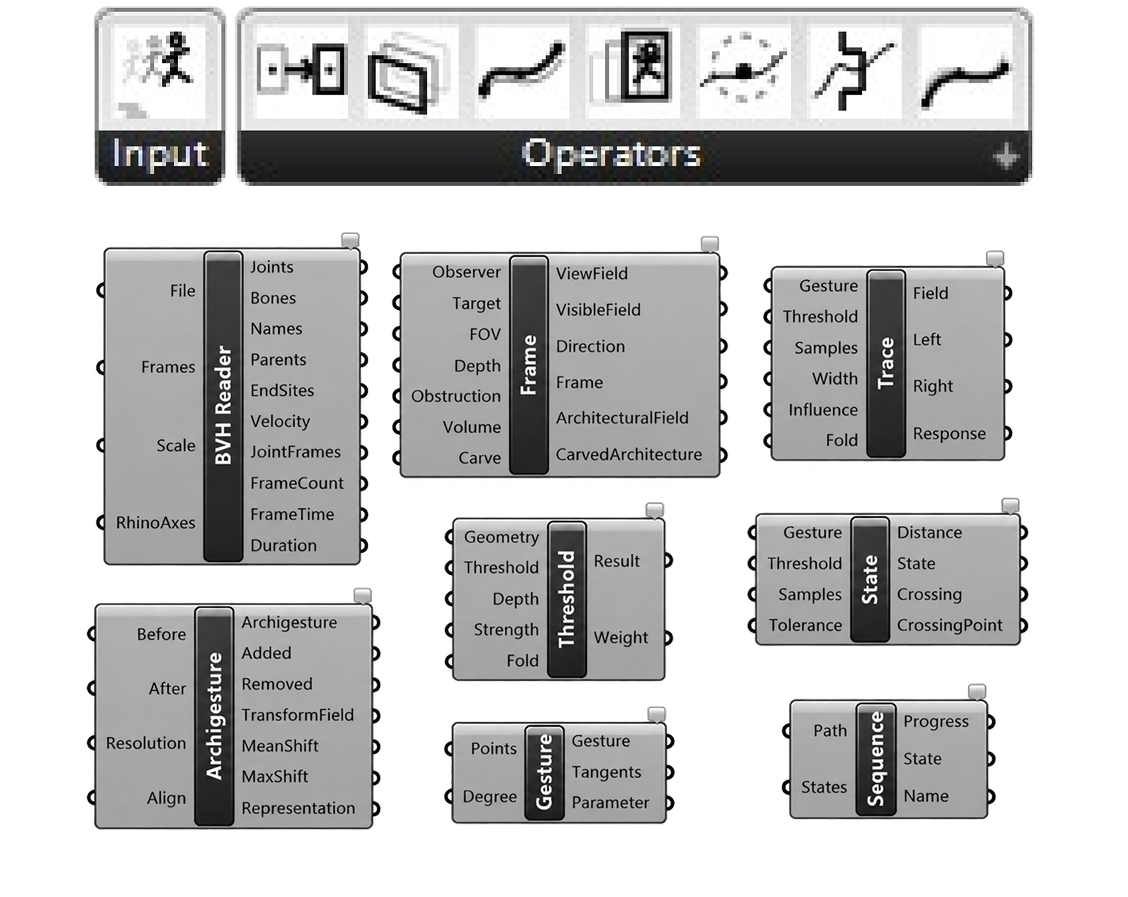
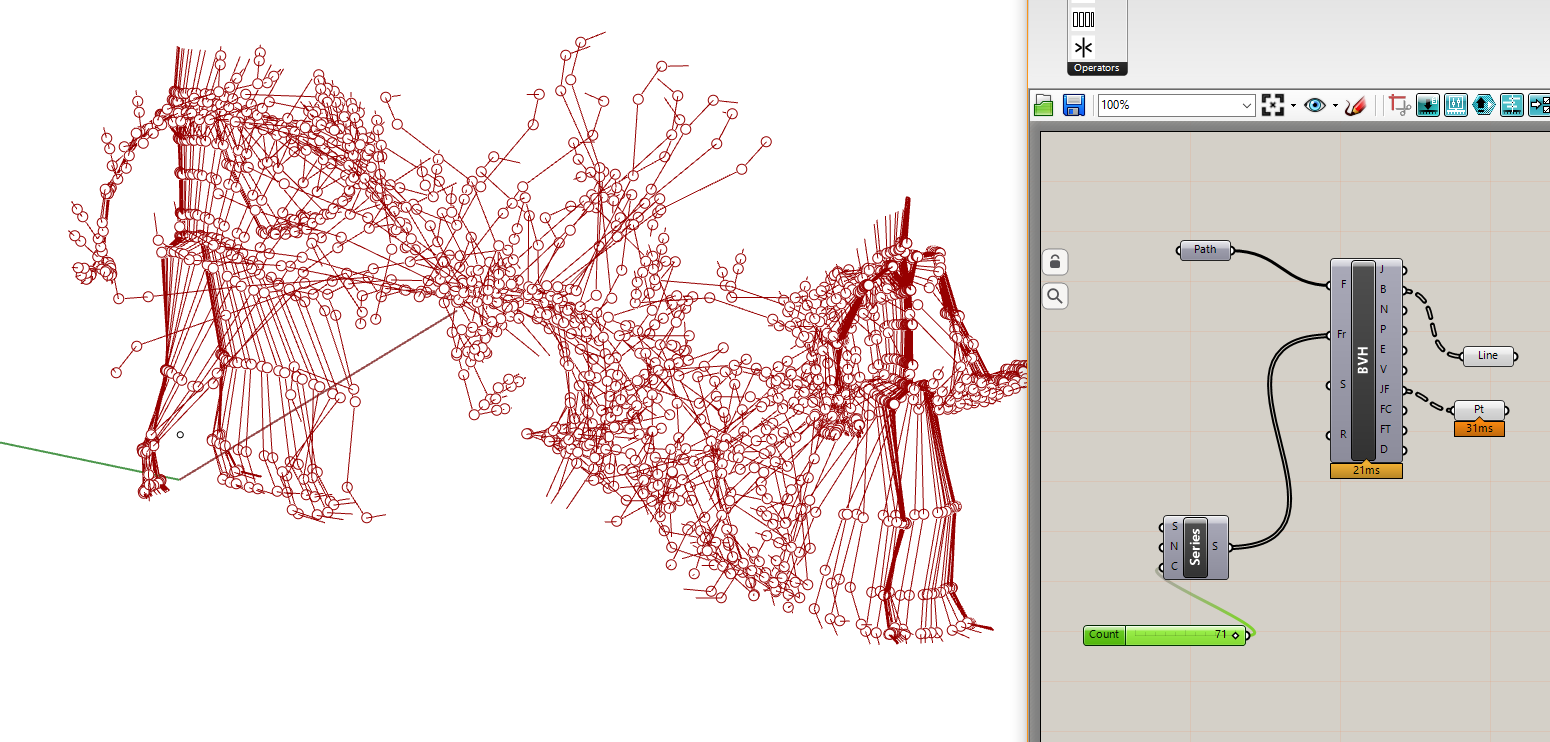
AGOS.BVH
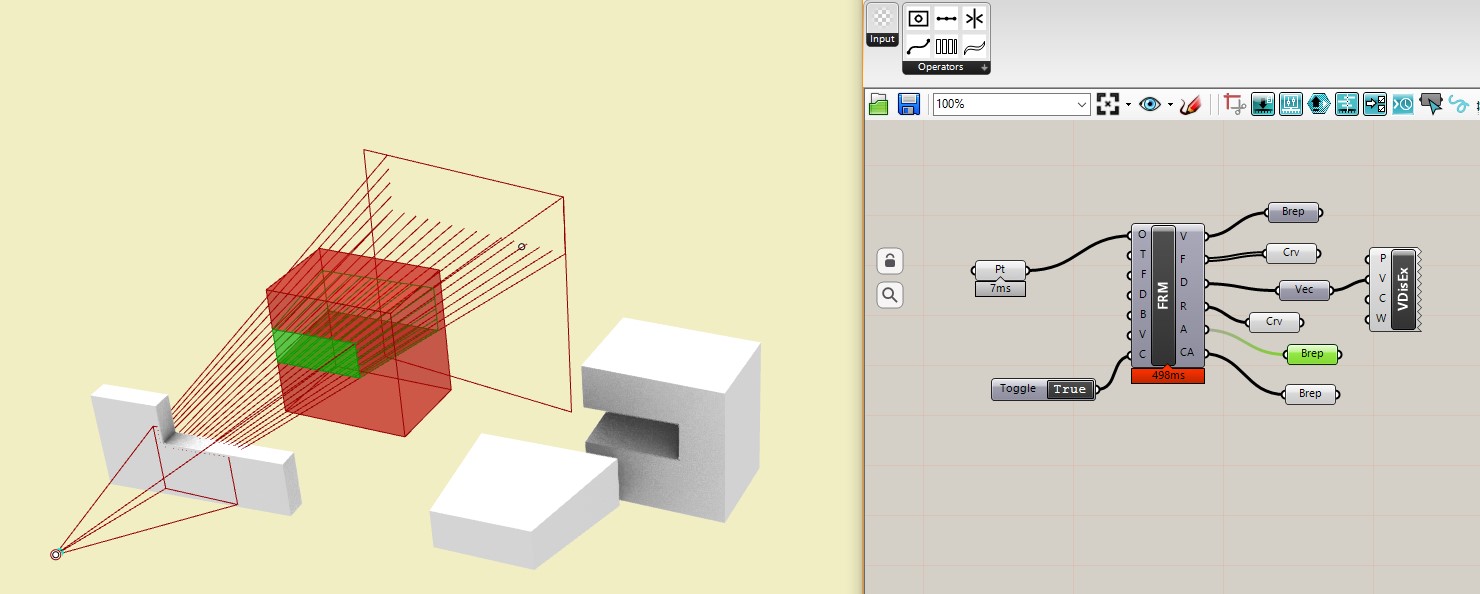
AGOS.Frame
AGOS Manta
AGOS research framework